Spinal Curvature
Scoliosis Treatment
In Kent, WA.
Scoliosis is a sideways curvature of the spine that can range from mild to more pronounced, sometimes contributing to back pain, muscle imbalance, or postural changes. We evaluate the degree and impact of your curvature as part of a full spinal exam.
Overview
Understanding Scoliosis
Scoliosis is a sideways curvature of the spine that can range from mild to more pronounced, sometimes contributing to back pain, muscle imbalance, or postural changes. We evaluate the degree and impact of your curvature as part of a full spinal exam. Our evaluation determines the specific cause before recommending adjustments, soft tissue therapy, or rehabilitative exercise.
Common Signs
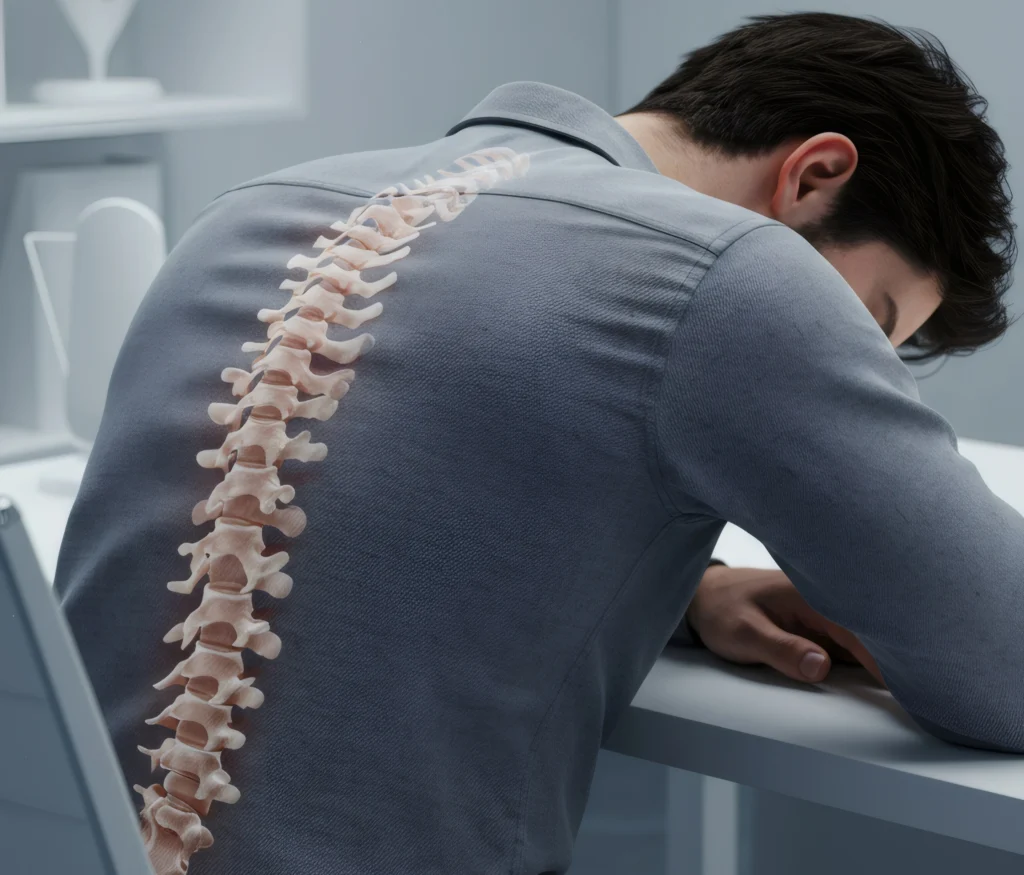
Signs Of Scoliosis To Watch For
Uneven Shoulders Or Hips
Visible Spinal Curve
One-Sided Back Pain
Muscle Imbalance Or Fatigue
Common Causes
What Causes Scoliosis?
Idiopathic (Unknown Cause)
Most scoliosis cases, especially in adolescents, don't have a single identifiable cause.
Degenerative Changes
Spinal joint and disc wear over time can contribute to curvature that develops in adulthood.
Muscle Imbalance
Uneven muscle strength or tightness along the spine can contribute to or worsen postural curvature.
Our Approach
How We Treat Scoliosis
Postural & Spinal Exam
We evaluate the degree of curvature and how it's affecting your posture, movement, and symptoms.
Imaging Review When Indicated
When appropriate, we review or coordinate imaging to understand the degree of curvature.
A Plan Focused On Symptoms & Function
Chiropractic care for scoliosis focuses on managing associated pain and supporting spinal function rather than reversing the curve itself.
Scoliosis Ranges Widely — An Exam Helps Clarify What You’re Dealing With
Mild curves are common and often don't require active treatment, while more pronounced curves can benefit from monitoring and a management plan. An evaluation helps determine where your case falls and what, if anything, is appropriate.
Scoliosis Treatment FAQ
Chiropractic care does not reverse or straighten a structural curve; our care focuses on managing associated pain, muscle imbalance, and function rather than correcting the curve itself.
No — while adolescent idiopathic scoliosis is common, curvature can also develop or progress in adulthood.
Imaging is typically used to confirm and measure the degree of curvature; we review or coordinate imaging when appropriate.
Yes — uneven spinal loading from a curve can contribute to one-sided back pain and muscle fatigue.
It depends on the type, degree, and your age — some curves remain stable while others progress; monitoring is part of an appropriate management plan.
Dealing with scoliosis?
Call 253-631-7933 or request an appointment — we'll start with an exam to understand what's causing your symptoms.